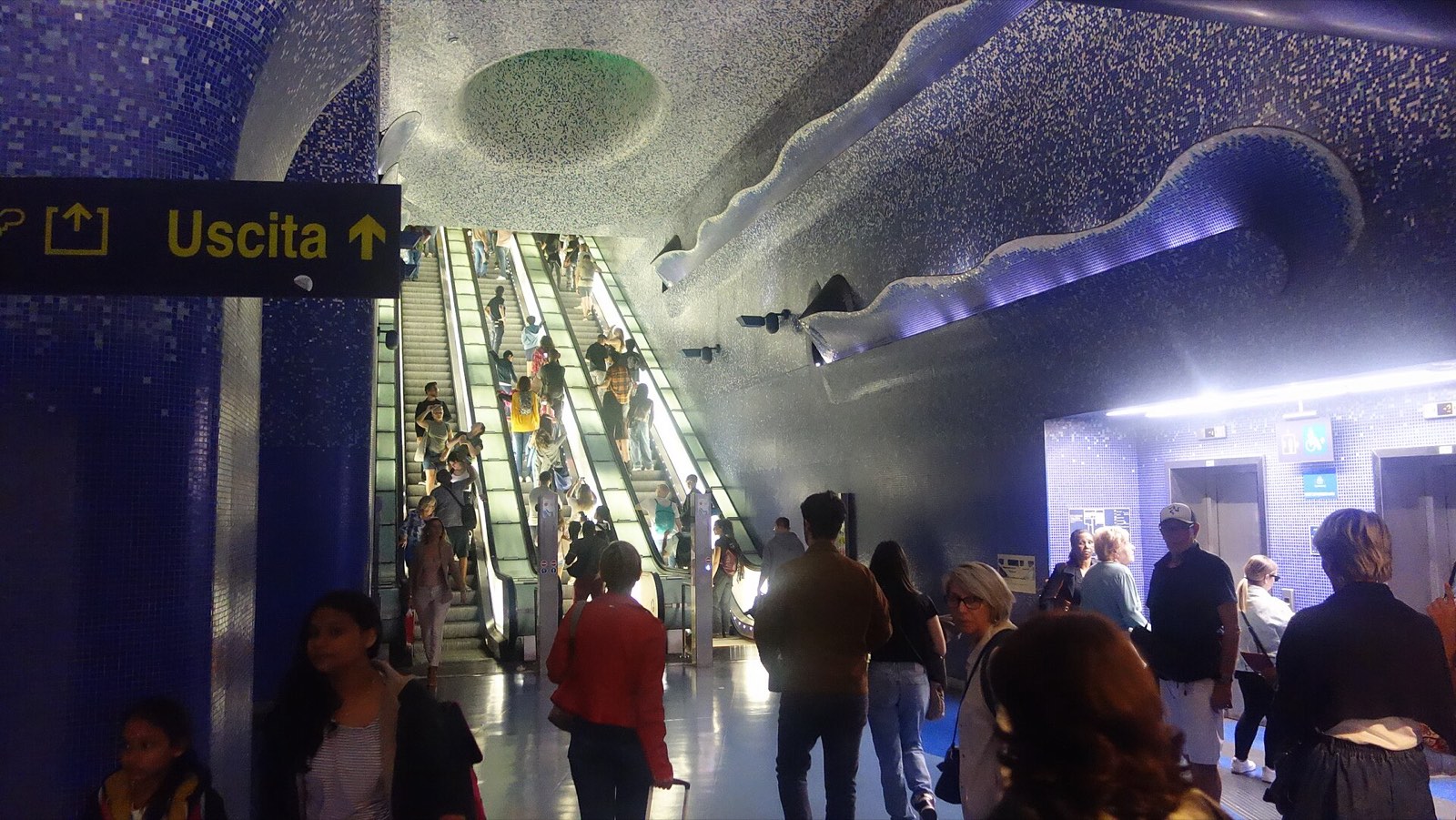
Most cities hide their metro. Naples shows it off. Ride Line 1 through the centre and you pass through mosaics, light installations, sculpture and photography, all part of the daily commute.
They are known as the Stazioni dell'Arte, the art stations. Rather than build plain tunnels, the city invited architects and artists to design them, and over the years Line 1 has become one of the largest collections of contemporary art in Naples. It is open to anyone with a ticket, and the people looking at it are mostly on their way to work.
Here are the stops Ines loves most.
ToledoInto the sea
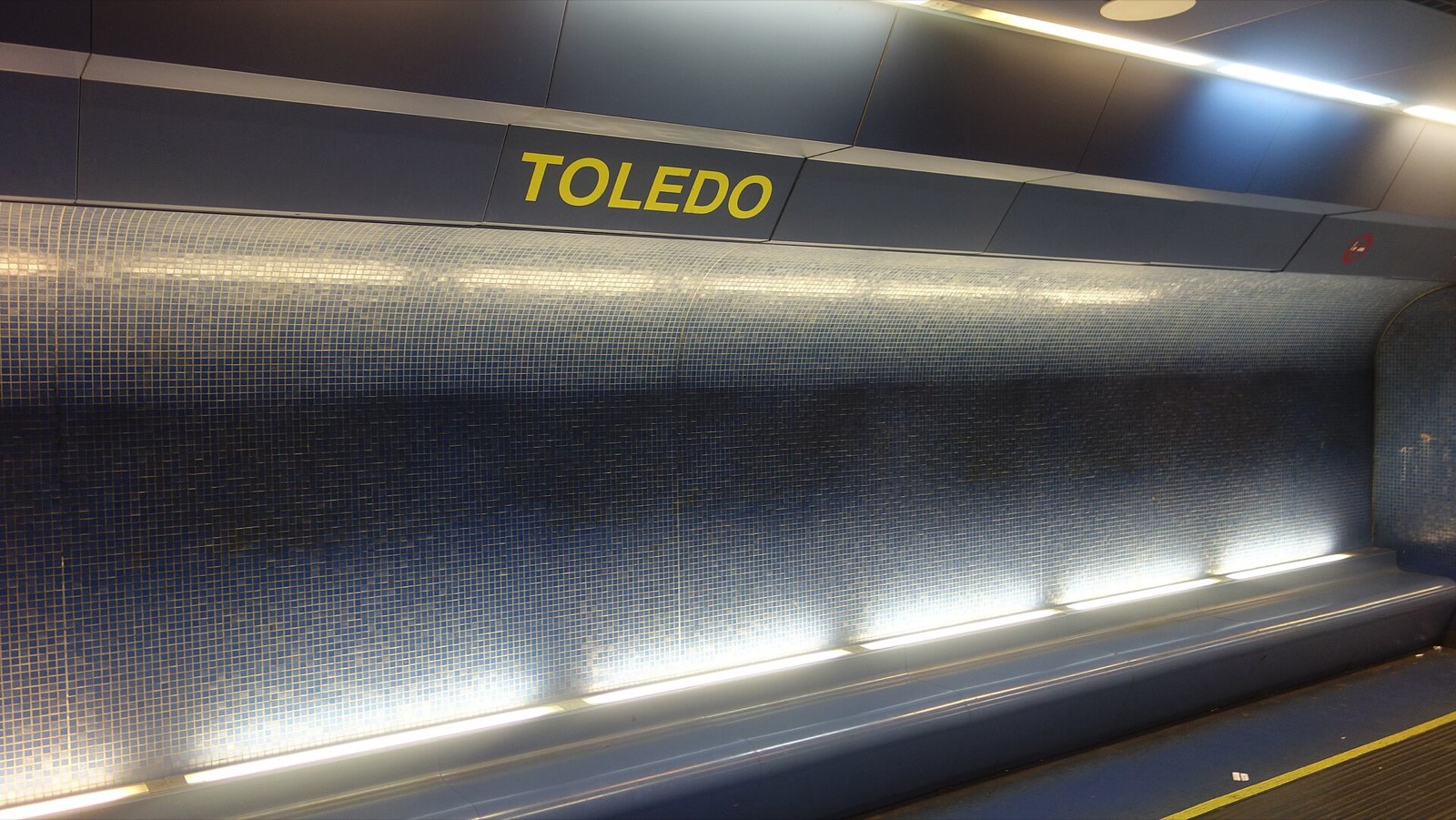
This is the famous one, often named among the most beautiful stations in Europe. The Catalan architect Óscar Tusquets Blanca designed it as a journey downwards: you begin in warm, earthy tones near the street and sink into deeper and deeper blues, as if the city were sliding under the Bay of Naples.
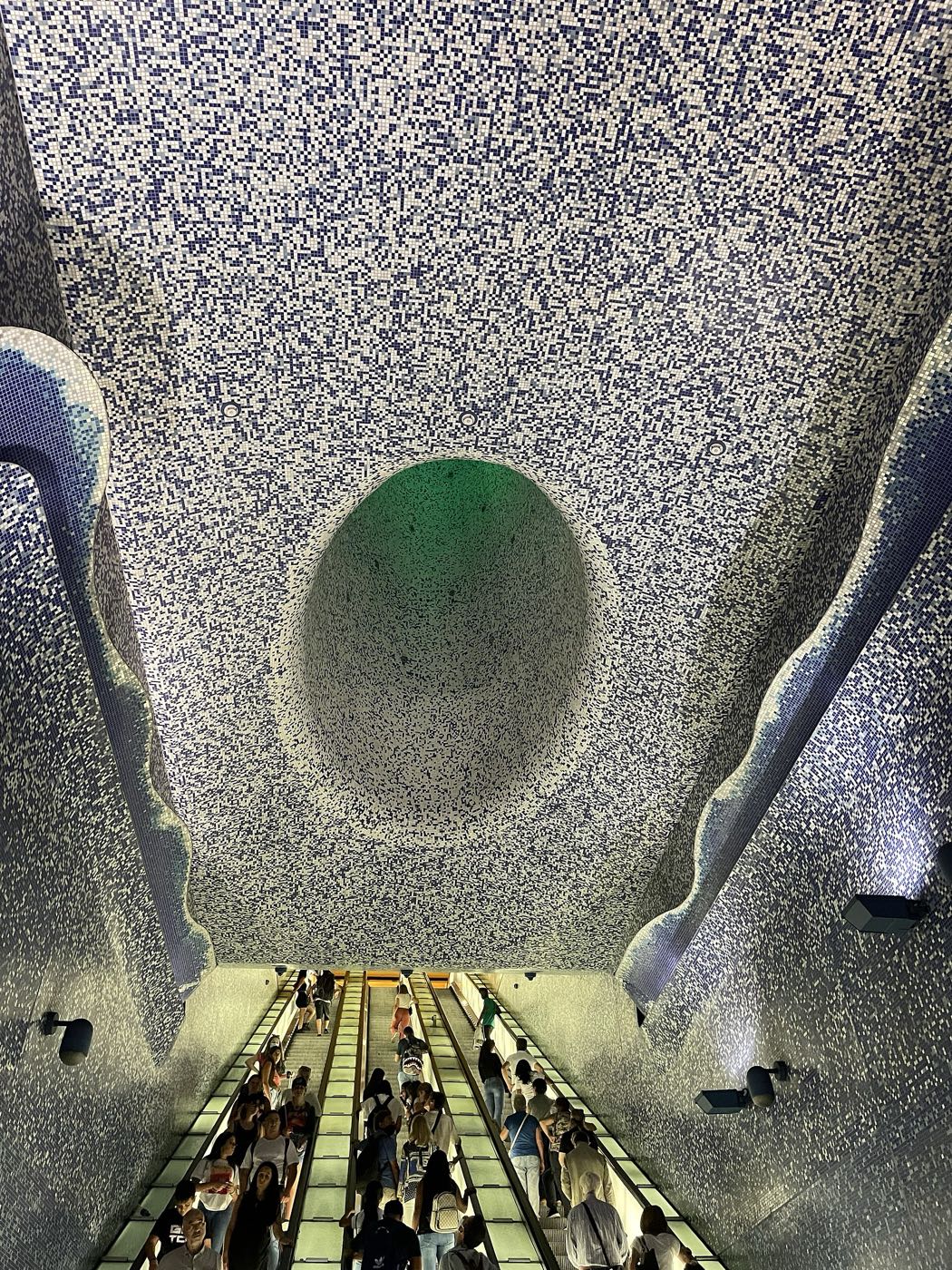
The moment everybody remembers is the escalator ride beneath the crater de luz, a great funnel of glittering tiles that reaches up towards daylight. Look out too for works by William Kentridge and Robert Wilson along the way. Then step out onto Via Toledo, one of the city's great shopping streets, with the Quartieri Spagnoli climbing the hill beside you.
UniversitàPink, lime and the digital age
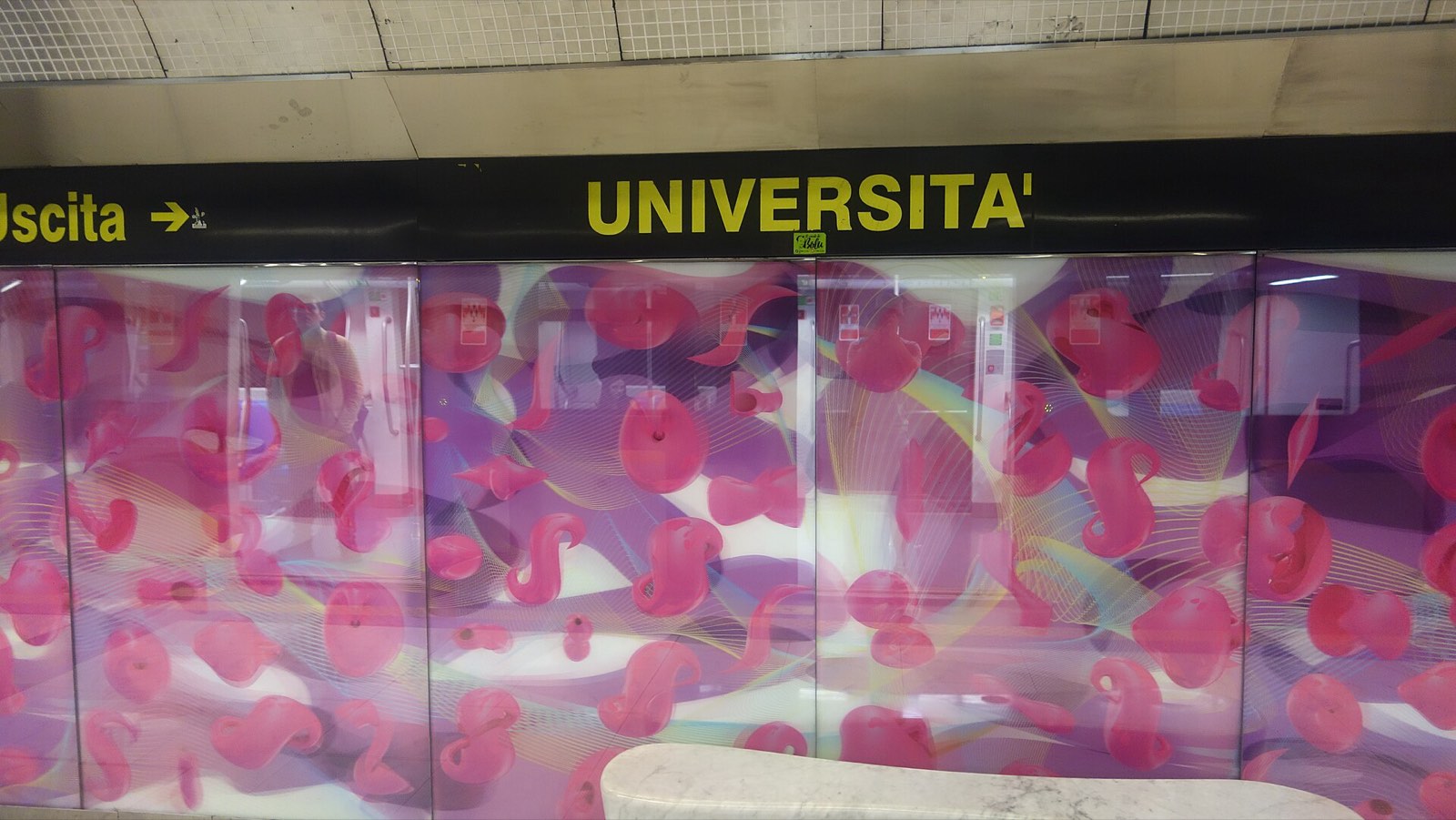
A complete change of mood. The designer Karim Rashid filled Università with bright pinks, acid greens and flowing graphics, a station about language, information and the digital world. It is playful and a little bit mad, and it is full of students.
Ask Ines to show you the two columns hiding the profiles of Dante and Beatrice. Most people walk straight past them.
MunicipioTwo thousand years in one station
Digging a metro in Naples means digging through history, and at Municipio the history answered back. Building the station uncovered remains of the ancient harbour, including Roman boats, and the foundations of a tower from the medieval Castel Nuovo just above.
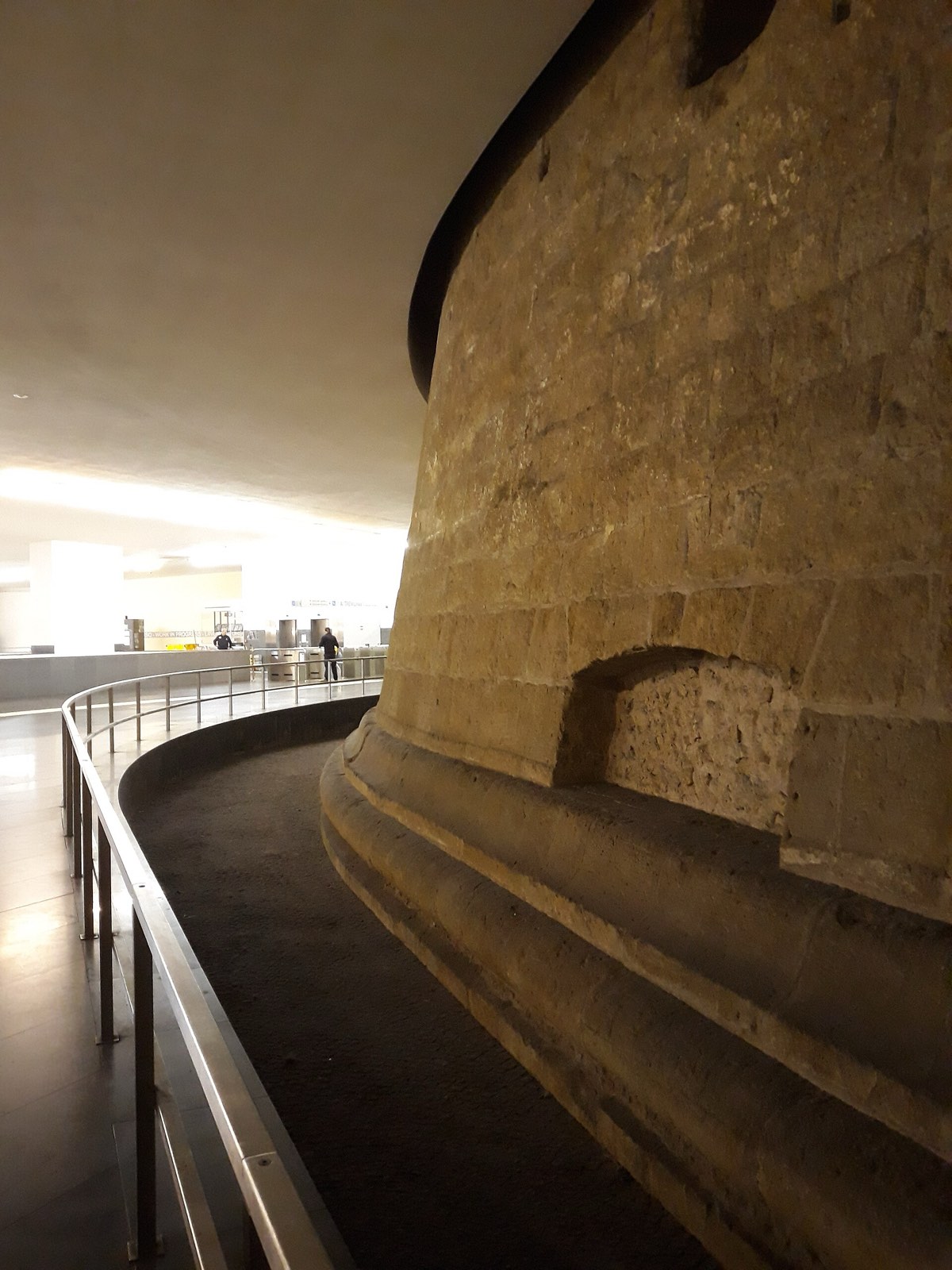
The architects Álvaro Siza and Eduardo Souto de Moura built the old stones into the station rather than hiding them, so you walk past them on your way to the train. It is the perfect place to see what Ines means by the past and the present living side by side.
In Naples you cannot dig a hole without finding a story. The metro just made it official.
MuseoHercules at the turnstiles
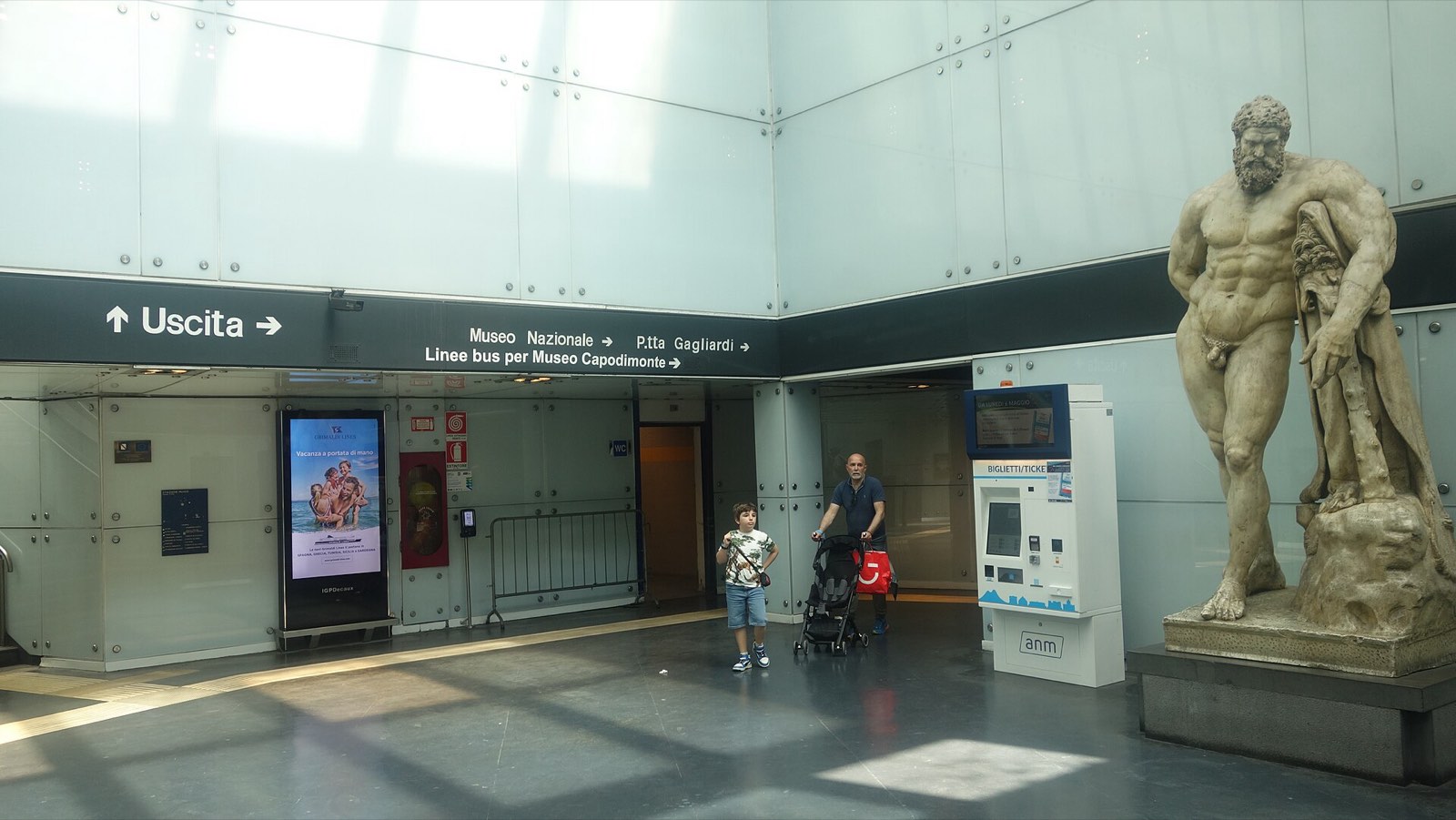
Gae Aulenti designed Museo to lead you straight to the National Archaeological Museum, and a giant copy of the Farnese Hercules waits for you on the way out. The original stands upstairs in the museum, among some of the greatest treasures of Pompeii and Herculaneum.
Dante and MaterdeiWords and colour
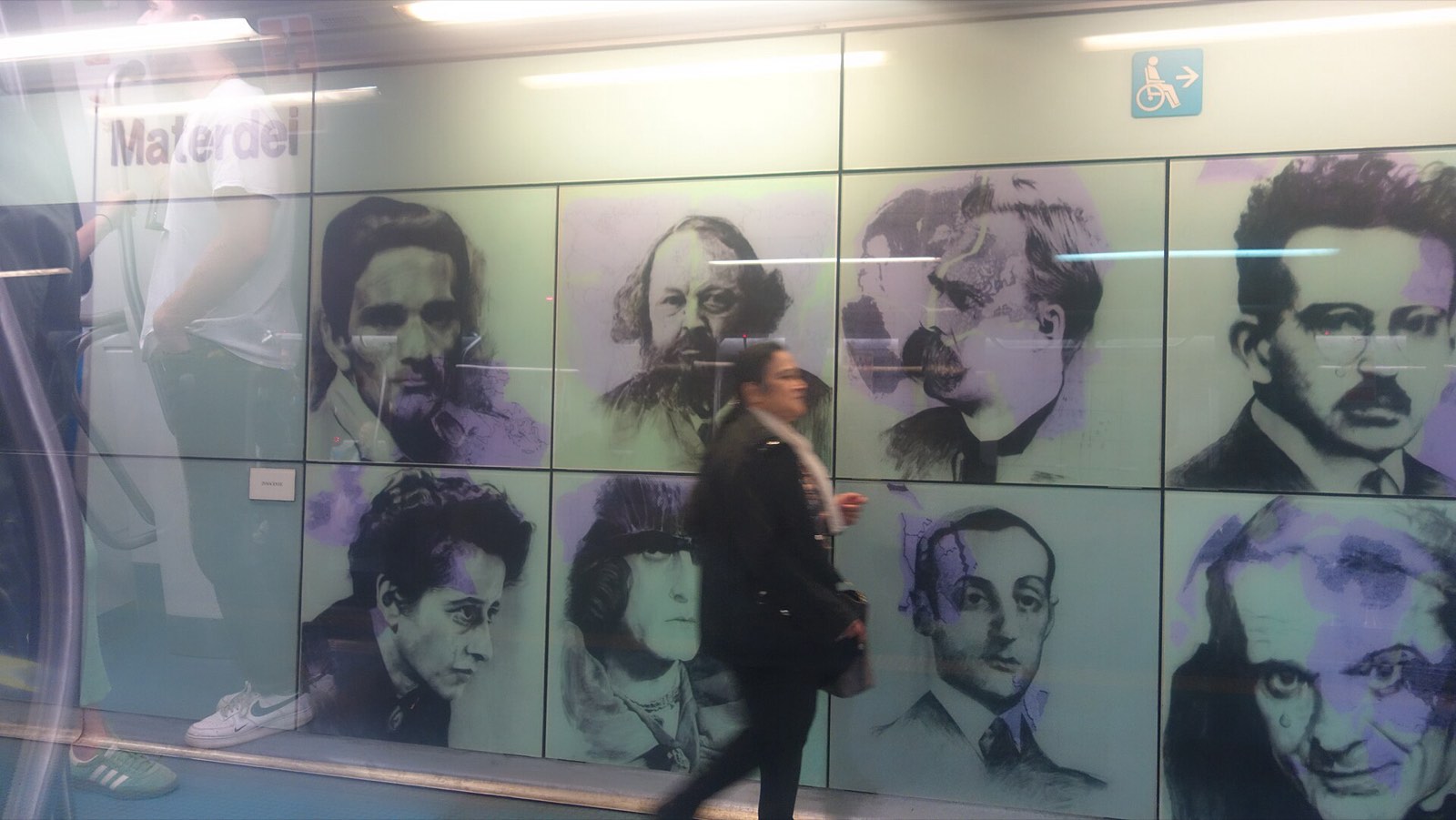
At Dante, again by Gae Aulenti, look for works by Joseph Kosuth and Jannis Kounellis, then come up into the square where booksellers and students gather. A couple of stops further on, Alessandro Mendini made Materdei cheerful and bright, a station that feels like a design studio.
GaribaldiWhere you probably arrive
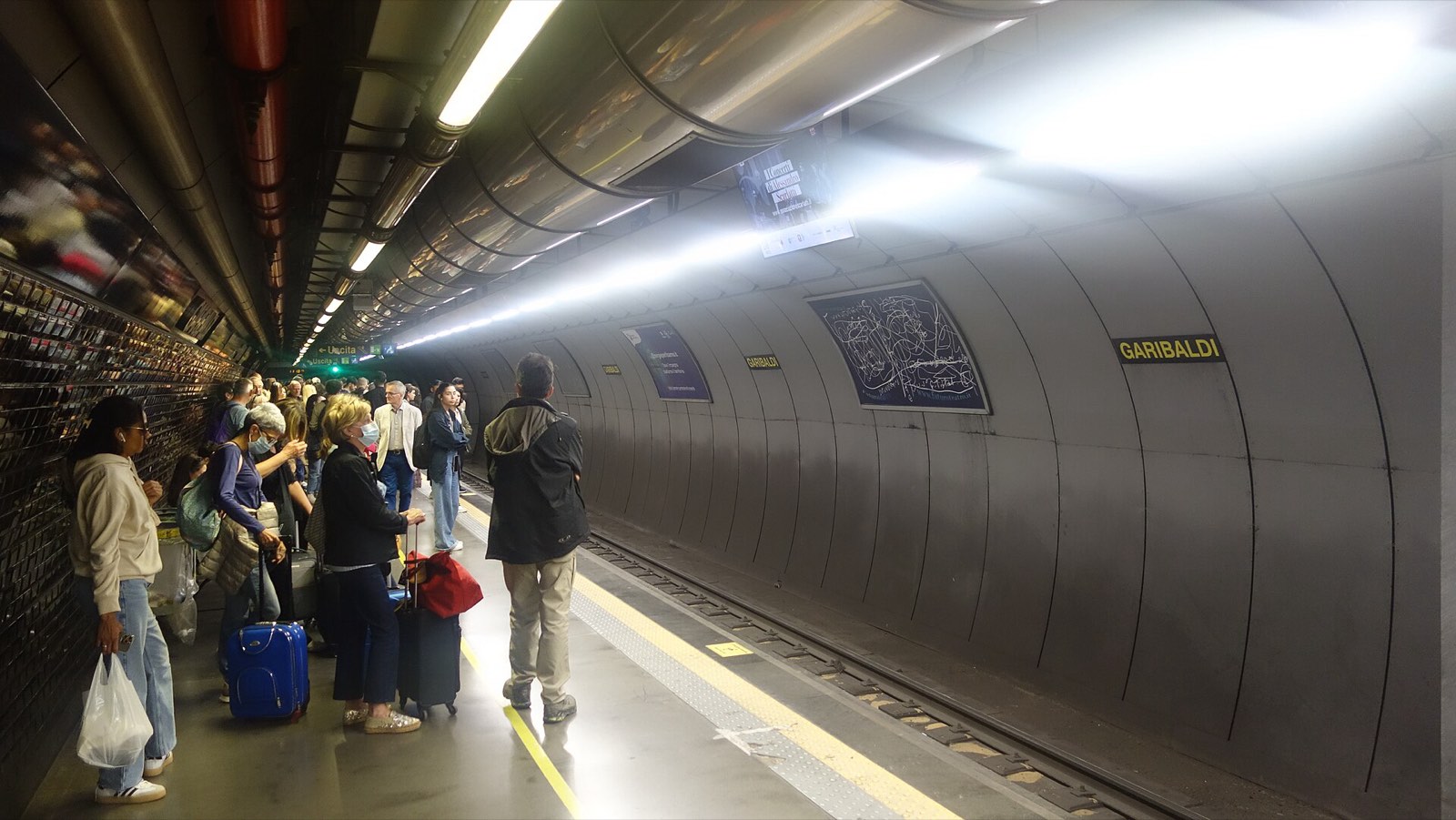
If you come into Naples by train, this is your welcome. Dominique Perrault designed the station and the canopy over the square, and on the platforms Michelangelo Pistoletto's mirror works let you see yourself among the travellers. You become part of the artwork before you have even found your hotel.
Seeing them with Ines
The art stations are a lovely way to rest your legs between walks, and a brilliant plan for a hot afternoon or a rainy morning. Ines plans the stops around your day, so you see the best of them without wasting time or tickets, and come up into the right street at the right moment.
She won't recite the name of every artist. She will make sure you look up at the right time.
Ines doesn't claim to know every date and every detail. She is your host: she welcomes you to her city and helps you live it. Want to see it with her?
Plan your day with Ines